Bannetons
Rattan proofing baskets, sized by dough weight
A banneton, or brotform, holds a soft dough in shape while it proves, then turns it out onto the peel with a pattern of rings on the crust.
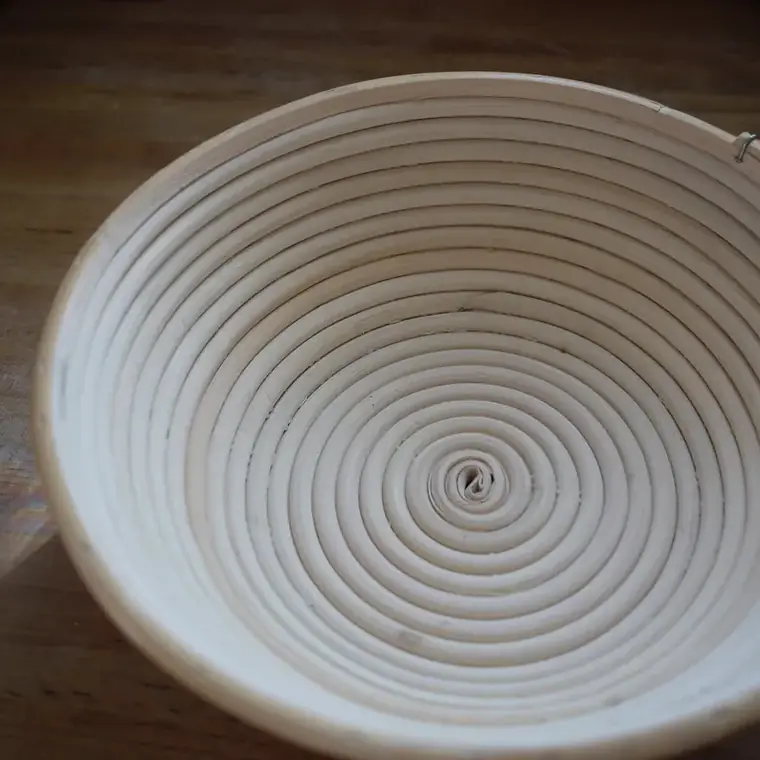
Round banneton, 22 cm, with liner
Rattan cane, sized for a 500–750 g dough round
A$34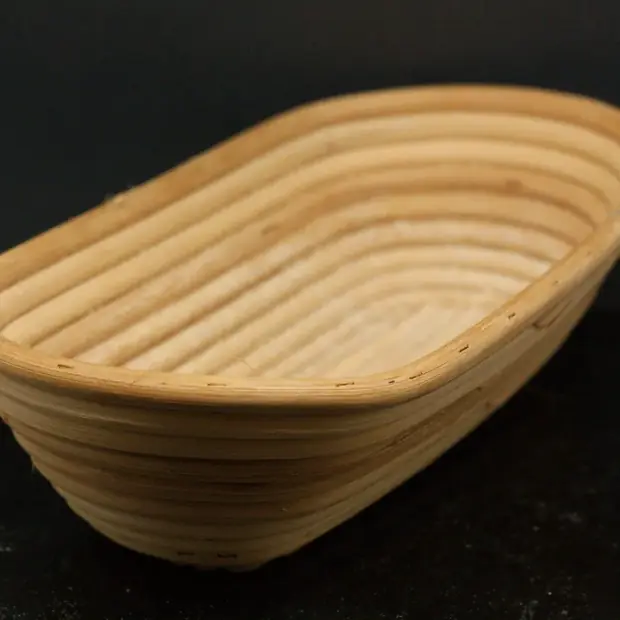
Oval banneton, 28 cm, with liner
Rattan cane, sized for a 750 g–1 kg batard
A$38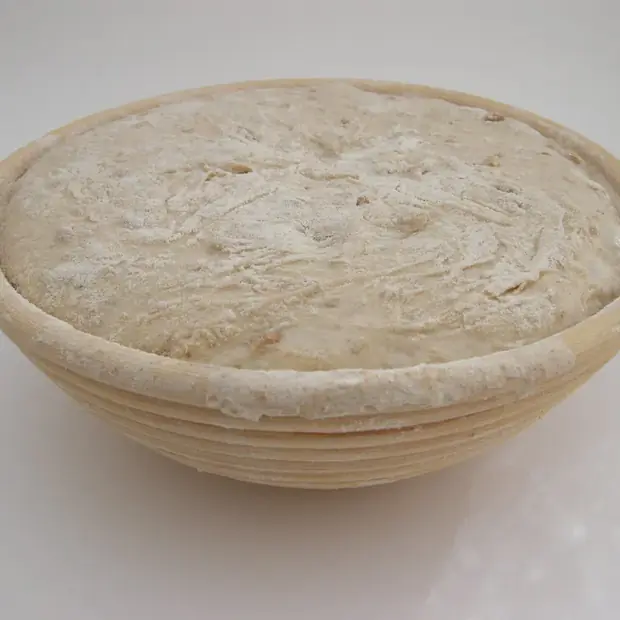
Starter kit (banneton, lame, scraper)
Round banneton with liner, lame and blades, bench scraper
A$69Why proof in cane
A sourdough at 75 per cent hydration or higher has no interest in holding its own shape. Leave it on a tray and it slumps into a wide, flat disc. A banneton gives it walls. The dough leans against the coils, the cane wicks a little moisture from the skin so it firms slightly, and when you tip it out the loaf keeps its height long enough to set in the oven.
Rattan is the traditional choice because it is light, it breathes, and the round coils leave that familiar spiral of flour on the crust. Our baskets are made from smooth, peeled rattan cane wound in tight rings and stitched at intervals, with no varnish or coating on the inside where the dough sits.
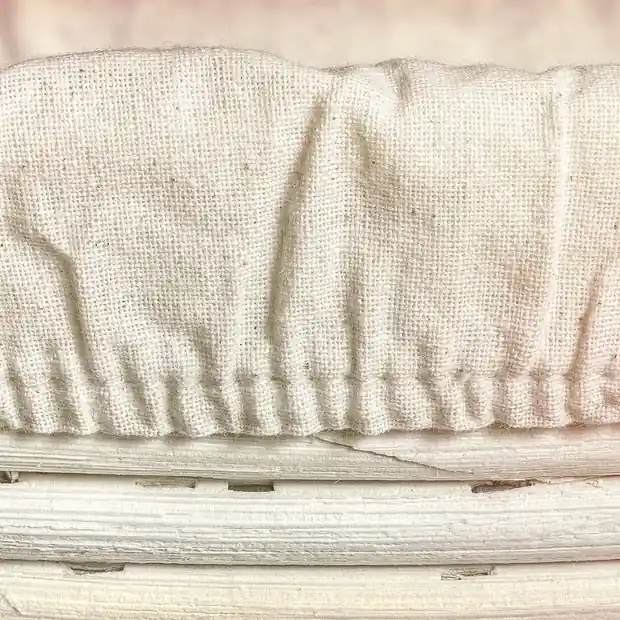
Both sizes come with a linen liner that slips over the rim on an elastic edge. Use it for very wet doughs, for loaves you want plain on top, or while a new basket builds up its first layer of seasoning flour.
Choosing a size
Match the basket to the dough, not the flour
| Basket | Dough weight it suits | Shape on the bench | Price |
|---|---|---|---|
| Round, 22 cm, with liner | about 500 g to 750 g | boule | A$34 |
| Oval, 28 cm, with liner | about 750 g to 1 kg | batard | A$38 |
| Starter kit: round banneton, lame, scraper | about 500 g to 750 g | boule | A$69 |
A quick check: weigh your full dough after mixing. If it falls between 500 and 750 g, take the round. Between 750 g and 1 kg, take the oval. If you bake two loaves from one mix, buy two baskets of the same size so they prove at the same rate and bake evenly side by side. A dough much over 1 kg is better split in two than squeezed into a bigger basket; very large loaves struggle to bake through before the crust darkens.
Diameter is measured across the top of the basket from outer edge to outer edge, so the usable inside is a little narrower.
Dusting, drying and looking after the cane
- Dust with rice flour. Rice flour has no gluten, so it does not turn gluey against wet dough the way wheat flour can. Shake a generous layer over the inside of a new basket, tip out the excess, and dust lightly again before each proof.
- Season it. The first few bakes leave a fine coat of flour in the grooves between the coils. That layer is what stops sticking, so leave it there rather than scrubbing it out.
- Dry it after every use. Tap the basket out over the sink, brush between the coils with a stiff dry brush, and leave it upside down somewhere airy until it is completely dry. A spell in the sun is ideal.
- Do not soak it. Water swells the cane and a basket stored damp will go musty. If a patch of dough has stuck, let it dry hard first, then brush it away.
- Wash the liner, not the basket. The linen liner goes through a cool wash without fabric softener and dries flat. Iron it if you like a crisp finish on the loaf.
The starter kit
One box for a first proper loaf
The starter kit is the round 22 cm banneton with its liner, a bread lame with five blades and a steel bench scraper, packed together for A$69. It covers the three moments where a new sourdough baker usually reaches for something they do not own: dividing and shaping on the bench, the long proof, and scoring just before the loaf goes into the oven.
Bought one by one, the same tools would cost more. The bowl scraper is not included in the kit; if you want one, the scraper pair can be added to the same order.
Every kit ships with the same printed care notes as the single items, covering rice flour dusting, drying the cane, changing blades safely and washing the liner. If you already own a banneton, the lame and the scraper pair on their own are on the lames and scrapers page.