Linen
Flax couches and bread bags
Two pieces of plain, heavy linen: one shapes baguettes while they prove, the other keeps a finished loaf crisp a little longer.
Linen couche, 60 × 90 cm
Heavy unbleached flax, holds three baguettes
A$29Linen bread bag
Drawstring flax bag, fits a 1 kg loaf
A$22The couche, 60 × 90 cm
A couche is a length of heavy linen that baguettes and long rolls prove on. You lay it on a board or tray, dust it with rice flour, set the first shaped baguette along one edge, then pinch the cloth up into a pleat beside it. The next baguette goes on the other side of the pleat, and so on. The folds act as walls, so each piece of dough rises up instead of spreading sideways into its neighbour.
Our couche is unbleached flax linen woven tight and heavy, so it holds a crisp fold and does not sag under a wet dough. At 60 by 90 cm it pleats comfortably around three standard home baguettes, or four shorter batons, on a tray that fits a domestic oven. The edges are hemmed so it will not fray in the wash.
Because flax is stiff and slightly rough, dough releases from it more readily than from cotton. A firm rub of rice flour into the weave the first time you use it, and a light dusting after that, is usually all it needs.
The couche is A$29.
Weave and washing
Linen likes to be left alone
Caring for the couche
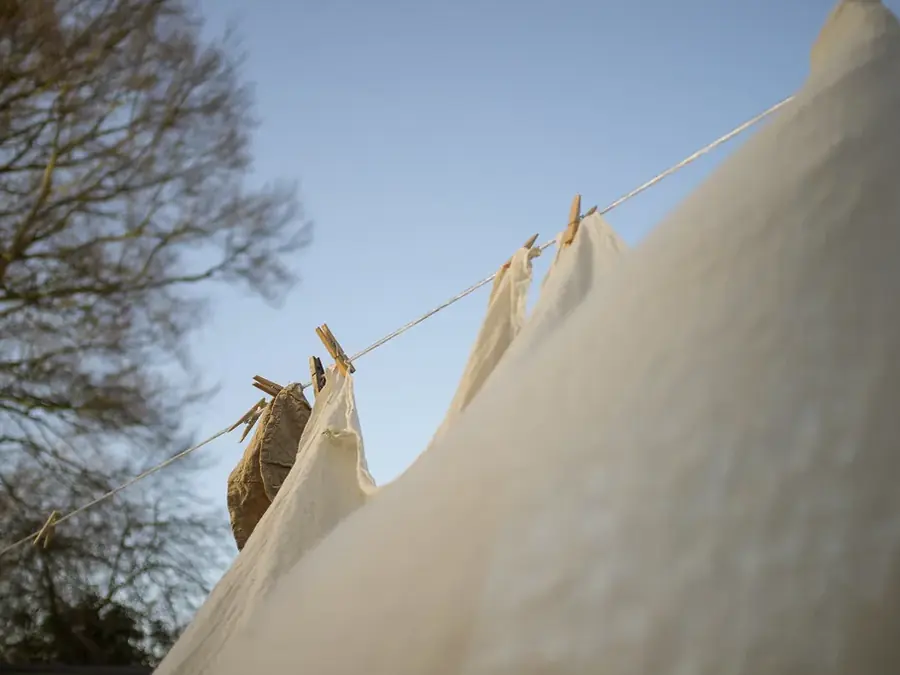
Most bakers never wash their couche. After a bake, shake it out outside, brush off any dried dough with a dry brush, and hang it until bone dry before folding. The flour that stays in the weave is a seasoning that stops the next dough sticking, much like the cane of a banneton.
If it does need a wash, scrape off what you can first, then wash cool by itself without softener, which would coat the fibres and make them cling. Dry flat or on a line and give it another rub of rice flour before its next use.
Caring for the bread bag
The bag is a different story: it is meant to be washed often. Shake out the crumbs after each loaf and put it through a cool wash every week or two. It may shrink by a centimetre or so on the first wash, which we have allowed for in its size.
Line dry and it is ready for the next loaf. Ironing is optional; the bag works just as well soft and creased.

The linen bread bag
Seal a crusty sourdough in plastic and by the next morning the crust has gone soft and leathery while the crumb sweats. Leave it bare and it dries out from the cut face. A linen bag sits in between: the weave lets moisture escape so the crust stays crisp, while the cloth slows the crumb from drying too fast.
Our bag is double-layer flax linen with a cotton drawstring. It is cut to close around a loaf of up to about 1 kg, whether a round boule or a long batard, with room to roll the top over. Store the loaf cut side down on the board inside the bag for the best results.
For a crust that has softened by day two or three, a few minutes in a hot oven brings it back. After that, sliced and frozen is the better plan.
The linen bread bag is A$22. It makes a fair gift for any baker who already owns everything else.