Scoring and handling
Lames, blades and dough scrapers
The two tools that do the most work for the least money: one cuts the loaf so it opens where you choose, the other moves sticky dough without tearing it.
Bread lame + 5 blades
Wooden-handled holder, five double-edged blades. The blade sits on a slight curve, which is what lets you cut under the skin to lift an ear.
Scraper pair, bench + bowl
Steel bench blade plus a flexible bowl scraper. The pair covers dividing on the bench and clearing every last scrap from the bowl.
Starter kit (banneton, lame, scraper)
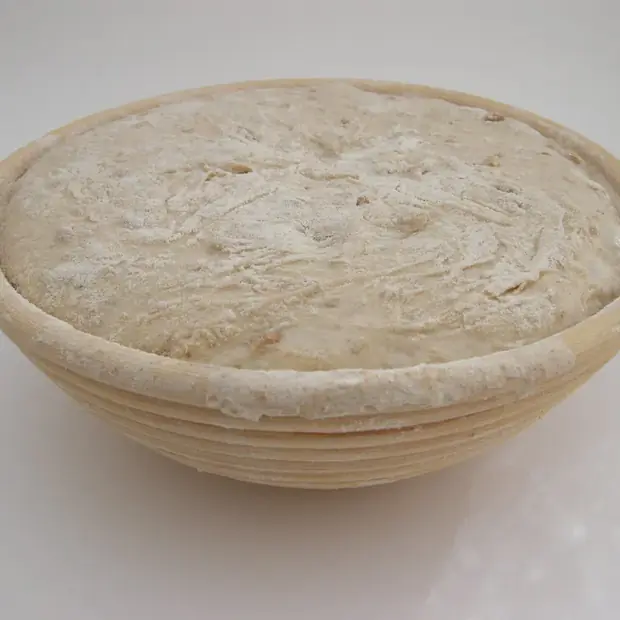
Round banneton with liner, lame and blades, bench scraper. The round banneton, liner, lame with blades and the steel bench scraper in one box.
Why a loaf needs scoring
As a loaf hits the heat of the oven, the gas inside expands fast and the dough springs upward. That oven spring has to escape somewhere. Without a cut, the crust tears wherever it is weakest, usually along a seam on the side. Scoring decides the place for it: a single cut along a batard, a cross on a boule, a row of short slashes on a baguette.
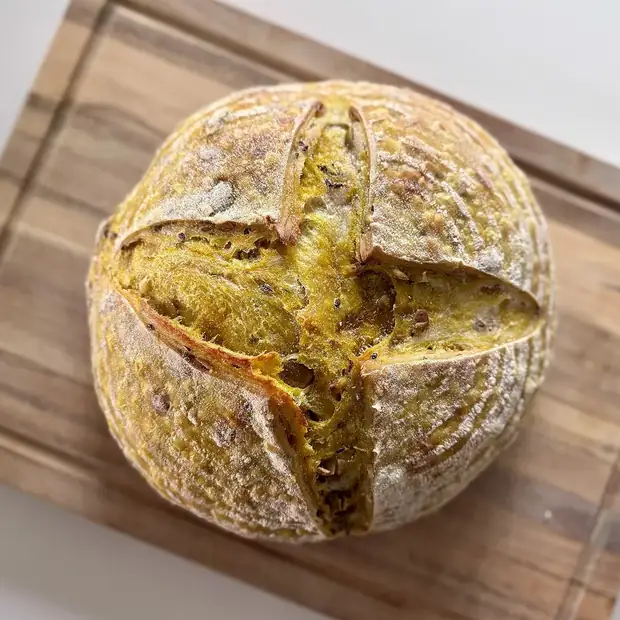
A good score is quick and confident. Hold the lame so the blade meets the dough at a low angle, around 30 degrees for an ear, and cut about half a centimetre deep in one smooth pass. A shallow, angled cut lets one edge peel back and set into the crisp ridge bakers call an ear. A cut straight down opens wide and flat instead. Both are right for different loaves.
The lame handle is turned from hardwood and holds a standard double-edged blade on a thin steel arm with a gentle curve. The blade is held firmly, does not wobble mid-cut, and slides off easily when it is time for a fresh one.
Blades
Sharp edges, changed often
The lame arrives with five double-edged blades in a paper sleeve. One edge lasts most home bakers several weeks of weekly loaves; when you notice the cut dragging or the dough puckering behind the blade, turn it to the second edge, then change it. A dull blade is the most common reason a score looks ragged.
Change blades over a folded tea towel, slide the old one off the arm away from your fingers, and wrap it in tape before it goes in the bin. Store the lame with its leather-free card guard on, out of reach of small hands.
- Score straight from the fridge after a cold proof: cool dough cuts cleaner.
- Dust the top lightly with rice flour first if you want the cuts to show in contrast.
- Wipe the blade between loaves if it picks up dough.
- Replacement blades are any standard double-edged safety blade, so you are never stuck for one.
The scraper pair
The bench scraper is a flat stainless steel blade, 15 cm wide, with a rolled handle. It divides a batch into even pieces, lifts dough off the bench during pre-shaping, builds tension as you drag a round towards you, and scrapes the bench clean of dried flour at the end. Its straight edge also doubles as a rough ruler, with centimetre marks etched along the side.
The bowl scraper is a flexible polypropylene crescent that bends to the curve of any mixing bowl. It folds in levain and salt, gets every scrap of dough out of the bowl so your weights stay accurate, and is gentle enough to use on a non-stick tin.
Both wash in warm soapy water and dry in a minute. The steel blade can go in the dishwasher; the flexible scraper keeps its edge longer if washed by hand.
The pair is A$18. The bench scraper alone is also part of the A$69 starter kit, so if you are buying the kit, add the pair only if you want a spare bench blade as well as the bowl scraper.